Brand Berlin: zwei Vorträge zur Stadtentwicklung

Die Bildungsakademie cimdata hat gestern zur zweiten Brand Berlin in die Eventpassage am Zoo geladen. Von Euch war ja keiner da, also werde ich hier kurz davon berichten. Zwölf Euro kostete das „Bloggerticket“, man war aber an der Kasse sehr überrascht, als tatsächlich jemand kam, um ein solches zu erwerben. Der Rest des Publikums bestand hauptsächlich aus Beteiligten des (Schüler-)Projekts sowie Schülern und Lehrenden der cimdata. Und bei weitem nicht alle waren freiwillig da. 😉

Unter der Überschrift Mein Berlin Mein Kiez gab es Vorträge und Workshops in drei Sälen sowie einen Raum für Aussteller wie zum Beispiel den Bezirk Prenzlauer Berg, die BSR, Urban Artists und andere.

Weil mich Berlin, Kiez- und Stadtentwicklung mit der Zeit eher mehr interessiert statt letztendlich langweilig zu werden, war ich sehr dankbar, mit zumindest teilweise Gleichgesinnten zusammen zu treffen, auf jeden Fall aber Aktuelles zur Lage der Situation zu hören. Und das live. Überhaupt bin ich ein Fan von Messen und Vorträgen. Vielleicht ist das auch der Grund, weshalb ich 23 Semester studiert habe.

Den Einführungsvortrag übernahm natürlich die Schirmherrin der Veranstaltung Dr. Franziska Giffey, Bürgermeisterin von Neukölln. Eigentlich hätte sie im Roten Rathaus beim Rat der Bezirksbürgermeister sein sollen, hat dort aber den Stellvertreter hingeschickt, weil sie lieber auf dem Mini-Kongress sprechen wollte. Ich vermute, ich hätte die gleiche Wahl getroffen.

So sprach sie denn von Ihrer Freude darüber, wenn junge Leute die Stadt gestalten, aber auch von den Vorurteilen, die Menschen von außerhalb gegenüber Berlin und insbesondere Neukölln haben. Sie wurde einmal von Touristen gefragt, ob man denn in Neukölln allein vor die Tür gehen könne. Ich beobachtet die Leute und glitt zwischendurch ab in meine eigenen Gedanken und Vorstellungen über Berlin, hörte entfernt einige Sätze der Rednerin über arabische Großfamilien, die im so genannten Dunkelfeld agieren (omg!) und funktionale Analphabeten und lernte nebenbei, dass die Sonnenallee den Untertitel „Arabische Straße“ trägt, weil dort 90% der Anwohner arabisch seien. Es haben sich aber auch über 1000 Betriebe der Kreativbranche im letzten Jahr in Neukölln gegründet. Wie macht man nun, dass die bleiben? Wie gestaltet man die Stadt so, dass das geht? Wer gestaltet die Stadt überhaupt? Und wem gehört sie? Diese Fragen wurden gestern gestellt.

Probleme sieht Frau Dr. Giffey beispielsweise in den Mietpreisen und in der Gentrifizierung. Menschen sollen sich aber weiterhin das Leben und Arbeiten in Berlin leisten können. Die Politik wird ja gern gefragt, was sie gegen die steigenden Mietpreise tut, die Bezirksbürgermeisterin antwortet mit Angebot und Nachfrage. Ich hatte nicht zum ersten Mal das Gefühl, die Politik wolle sich lieber um die Dinge kümmern, die Ihnen selbst wichtig erscheinen, weil das pauschal mehr Spaß und weniger depressiv macht und sich Reden über Start-Ups und Kreativwirtschaft besser anhören und formulieren lassen als welche über… ja, eben über alles andere.

Mir schien es, als würden mehr Fragen gestellt als Antworten gegeben, aber dies war ja auch nur der Einführungsvortrag.

Antworten anhand eines konkreten Beispiels lieferte einer der Folgevorträge, der mich auf besondere Weise gefesselt hat. Hanns-Friedrich Sefranek und Anja Pilipenko von der Genossenschaft für urbane Kreativität redeten über das Projekt Holzmarkt, wo seit 2012 nach und nach ein kreatives Dorf entsteht

Eigentlich gab es für das 18.000 m² große Grundstück zwischen Jannowitzbrücke und Ostbahnhof, auf dem bis 2010 die legendäre Bar25 gelegen hatte, bereits einen Masterplan zur Bebauung als sich Menschen, die eben keine Politiker sind, eine gemischte kreative Nutzung einfielen ließen. Die Initiative brauchte also ein (den Masterplan) überragendes Konzept, ein großes Team, Unterstützung in der Stadt und vor allem Geld, wenn vielleicht auch nicht unbedingt, um das Grundstück gleich zu kaufen (immerhin zehn Millionen). Geld braucht Berlin ja auch immer, weil es so sexy ist. Um die Schulden zu bezahlen, verkauft die Stadt eben Grundstücke.

Eine gemeinnützige Stiftung aus der Schweiz eröffnete den Akteuren des Holzmarkt-Projekts die notwendigen Möglichkeiten. Die Stiftung Abendrot erwirbt Grundstücke und nimmt sie so vom Markt, um sie Projekten zuzuführen. Das Holzmarkt-Projekt hat nun mit grundbuchlichem Eintrag für 75 Jahre das Erbbaurecht mit der Möglichkeit zur Erweiterung. Das Grundstück wird gepachtet.

Wenn alles fertig ist, wird es auf dem dreigeteilten Grundstück das kreative Dorf, ein Hotel und Europas grüßten Holzbaukomplex mit Studenten-WGs und Co-Working-Spaces geben. Von Anfang an bis zur Fertigstellung wird zwischengenutzt (Kater Holzig, Kater Blau, Restaurant, Friseur, Theater usw.).

Nun ist der Holzmarkt kein Kiez im Sinne eines gewachsenen Stadtquartiers. Trotzdem passte das Thema ganz wunderbar zur Brand Berlin, weil es zeigt, wie durch Bürgerinitiativen schrittweise Dinge entstehen können, die die Stadtplanung nicht voraussehen kann. Ursprünglich gab es eine Gruppe von Menschen, die Elektro-Parties veranstalten wollten. Alles andere entstand aus dem Bedürfnis nach gastronomischer Versorgung (Restaurant), Übernachtungsmöglichkeiten (Containerdorf, später Hotel), Unterbringung der Kinder (Kinderspielplatz) usw. Im August diesen Jahres wird die Kindertagesstätte eröffnet. Natürlich gibt es viele Informationen im Internet, die über die Stichworte Mörchenpark e.V., Genossenschaft für urbane Kreativität oder einfach Projekt Holzmarkt Berlin leicht zu finden sind. Im Bürgerverein kann jeder mitmachen.

gruß, heike.

Seasons: Spring

In the backyard of the house of my flat there is a tree. I‘m not sure what kind of tree it is, but every beginning of spring the whole place is filled with the smell of its blossoms. Winter is finally over.

baum im hof
Tree in my backyard

Don‘t get me wrong. I love winter for what it is. With its frostiness and the cosiness inside a warm flat smelling of baking and candles. Being the season for tea, warm socks and books and Christmas, of course. But I am quite happy to live in a place where seasons are changing. Every season has its own magic. In spring you value the fact of just not freezing anymore. Peoples‘ necks are finally getting longer, shoulders relax and the body slides back into its native position. My thoughts are getting smoother, my view on everything wider and my arms open up to second position. Even my hayfever weirdly feels like a liberation from the captivity of closed rooms winter holds us in once the Christmas period is over. Not to mention some pretty practical advantages the warmer season comes with, like less laundry and fewer winter jackets on the coat racks, as well as the growing motivation to get rid of some old stuff and make space for new stuff or yourself.

blumen für blogartikel
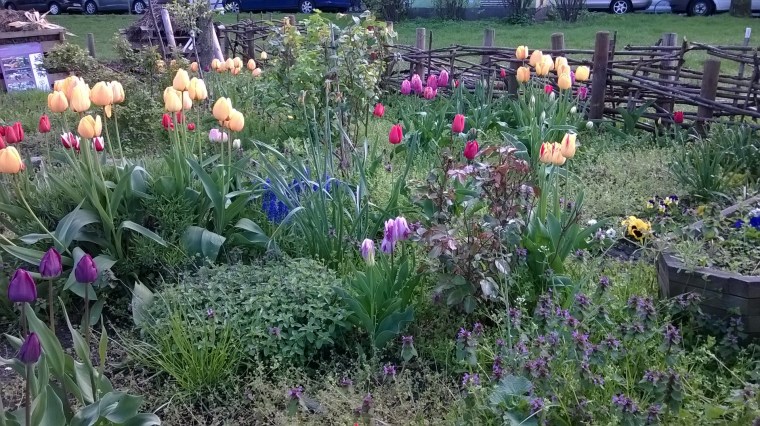
Flowers at Kracauer Platz Charlottenburg

But sometimes spring comes stuttering. Like a motor that won‘t start running. A few sunny and warm days gave us an advance on the coming summer. But we live on a credit and every wintery interlude makes me fear that the instalments might be expended before summer has even started and it might be over before it has begun. Too easily the body is reminded of freezing and tense postures once cold wind is emerging. Too big the temptation to switch on the heating again, get out thick bed linen once more and just stay inside your cosy home if you do not have to be anywhere. No need to put away winter jackets and coats. You might need them the day after tomorrow because the weather forecast could not promise more than one or two warm days.

Alone the shops appear unimpressed. They mock the climatical reality of German spring by displaying summery festival outfits and rhinestoned birkenstocks and call up our longing for warm days beyond 25 celsius. Today we‘re gonna get 21. Let‘s see how much space we can make!

gruß, heike.

I had a dream: shopping and cardboard

InstagramCapture_841bef78-a816-45e8-9fe3-df94d30fb3f0

I‘ve been dreaming quite a lot these last few weeks. I have no idea why. Perhaps I‘ve just been remembering my dreams better. But I feel like I have gained a whole new world with the new intensity and frequency of rememberable (is that a word?) dreams.

Last night I was late for an appointment. It was something about filming a video on a big wheel. Normally my job does not include such stuff. But it was work related. Otherwise I could probably have gotten around.

On my way outside (the hotel I was accommodated) I ran into my colleague Jenny. Obviously we were scheduled together. We hadn‘t seen each other in a long time. Either had she been absent from work for a while or I had. It wasn‘t clear. But I felt it would be time to tell her how excellent her work and what a wonderful person she was. She cried for joy. I hugged her. Normally people from work do not find their way into my dreams except this one time when I was shopping with Friedrich in kind of a future lanscape because he desperately needed new boots.

So Jenny and I were both late for the job but kind of early at the same time because the mall we were supposed to get our clothes from wasn‘t opened yet. They let us in though because we needed outfits for our job which seemed to be an exception from the rule. We weren‘t allowed in the shops but some hallstands were prepared for us in the personnel department (you probably know these long corridors behind heavy grey doors). So we were browsing through dresses and tops when I found something I liked in the reduced section and went to try it on. I wanted to have it for my own, but I thought it would be ok to do some private shopping as it wouldn‘t take much time. It was a light dress I would never wear while awake. This is the point were I lost Jenny and went on through dreamland on my own.

I don‘t remember if that dress actually fit or suited me. I guess, it was not important or relevant for whatever my subconscious wanted to teach me. The next thing I remember is that I saw two garbage men who were about to collect the dustbins from the corridor. I rummaged in my big handbag for I forgot what and found some old packaging I wanted to throw away and (please don‘t ask me how this is even possible, but I guess in a dream everything is) suddenly also had to get rid of a big cardboard box which either appeared out of nowhere or my bag. I disposed of that cardboard box by just putting it aside onto a staple of other boxes that lay around anyway. After all this was kind of a storage area. Boxes were lying around everywhere. The small stuff I wanted to put into one of the dustbins in the corridor. And because I found it naughty to just put my private waste into someone else‘s dustbin, I intended to ask those two men who were still working there.

I can‘t tell if they said yes or no. Neither can I tell you if I made it to the big wheel or if the interview (or whatever) was a success. I woke up. Bewildered. Trying to find out why my subconcious was such a hypocrite to secretly dispose of big stuff in the unseen corner of a corridor and then send me to ask for the permission to throw something small into other peoples‘ waste bins. If you have any suggestions in this regard please let me know.

gruß, heike.

Reinickendorf: Six villages

Last weekend has been far too beautiful to not go out and shoot 323 pictures to choose from for an article on the the six villages of Reinickendorf.

We know several settlement sites from reindeer hunters in the area of Reinickendorf from prehistoric times. The region then experienced the Neolithic Revolution (people settle down and start agriculture and cattle-breeding), the Bronze Age (metal tools) and Iron Age of course (more metal tools). Around 1230 (in the context of eastward expansion) our six villages were founded or assumed by German settlers: Hermsdorf, Heiligensee, Tegel, Reinickendorf (yes, there is a small one in the big one!), Wittenau and Lübars. Houses and farm buildings were erected around a central piece of green which accomodated the church and meadow, in most cases a small village pond, sometimes a blacksmith and after the Middle Ages also the school and fire brigade. The so-called village green was common property of the people in the village. People would keep poultry on that piece of land and round up their cattle at night in the middle of the village to protect it.

Alt-Heiligensee

You might know Heiligensee already from one of my previous articles. The village lies between Lake Heiligensee and River Havel at the northwestern corner of Berlin and Reinickendorf. As soon as you cross the river you’re actually leaving Berlin. The old village was first mentioned in 1308 already. Its name was „Hyelegense“ which can be pronounced the same way as the recent name with a bit of good will. I am glad to revisit Heiligensee so soon because you get an idea of what it looks like when the sun is shining. The church got its recent appearance as late as the 18th century (construction of the steeple) but probably has its origin in the late Middle Ages respectivley even earlier as a wooden predecessor which is the general development for Berlin’s village churches. The smith and fire brigade a more recent but still in operation. Heiligensee’s meadow is the longest of the six in Reinickendorf. It takes me ten minutes to cross to get to the supermarket when I am at Kurt’s (boyfriend).

Alt-Lübars

On your way to Lübars with the bus 222 you will recognize Berlin getting more and more rural with every kilometre. Shortly before the bus stops in the very heart of the old village you can turn your head to the left and get a quick view on the extended paddocks and meadows of the periphery that used to be confined only by the Berlin Wall until 1989. When I got off the bus at the end of the line I recognized I wasn’t the only „tourist“ to visit the suburbs that day. People spread with their cameras and sandwiches into the sun for a quick journey to the little church and school house or further north to explore what lay behind the village (greenfields and country lanes that will inevitably make you drift away from the city). It must be a nice spot to live in and the photos can hardly indicate the athmosphere of that cute little place where you’re surrounded by horses, history and the smell of nature (and horse dung).

Alt-Hermsdorf

In Alt-Hermdorf you will have difficulties to recognize the original shape of the old village green. I feel like I should know why because fifteen years ago I worked at the Reinickendorf museum of local history for the summer (which is also located just there). But I don’t. The church seems to stand aside. What I know is that there was a an old village and some kind of extension. But then we shouldn’t go over the top with history, right? To be honest, visiting Alt-Hermsdorf was a bit confusing, but we met a nice little squirrel which I tried to lure with an orange I had just found in front of the museum. (It didn’t work though.)

Alt-Wittenau

The historic centre of Wittenau is long and narrow and appears tidy and cleaned up. In fact you will find nothing else than the old church and its tiny churchyard on it. The church seems very old though it’s not. The village was founded around 1230 (just like the others) named „Daldorff“ and probably had a wooden church by that time (just like the others) although we don’t know what the wooden version looked like. At the end of the 15th century a cobblestone church was built and got its contemporary form by numerous modifictions during the next centuries due to fire and fashion. At the two surrounding roads you find the fire brigade and the old tavern („Dorfkrug“). The tavern with a special tavern license („Krugrecht“) is like in other cases mentioned in old documents already, significantly in the Landbook of Karl IV. (When the Holy Roman Emperor Karl IV. got the Margraviate Brandenburg from Otto V. in 1373 he wanted to kind of describe and catalogue the new area and created the Landbook which is in some cases the first historic source for a mention of villages, provincal towns or cities.).

Alt-Reinickendorf

Alt-Reinickendorf, to be honest, impressed me the most. Between the provincialism of the Reinickendorf (the big one) and the chici inner city it has preserved and refined its own charme and personality. When I got off the train on that seemingly abandoned single-track station I submerged into a different… I wouldn’t say world but… yes, I would say world. That place seemed so calm and easygoing that I imagined myself (and Kurt) (and dog) (which we don’t have) (yet) living there. I have inserted two pictures on the right. And yes, it might seem corny and white-bread but you haven’t been there, have you? 😉

The old village was founded in (surprise!) 1230. We do not have too much information on its equipment in former times though. The little church probably followed more or less the same career as the others: from wood or carcass to stone (late medieval stonework, in this case no palstering, even after the middle ages), being an aisleless one-room church which is common for Brandenburg. In contrast to the other old villages we do not find any historic buildings surrounding the meadow. I guess, too much was altered in the course of industrialisation and city development.

Alt-Tegel

The last of the six villages is Alt-Tegel which is located at Lake Tegel and has a nice lakeside promenade that offers everything from cotton candy to steamboat trips and a bulk of ducks, coots, swans and seagulls. Except from the lakeside which is crammed with tourists of all ages you will probably almost exclusively meet old people. Whenever I visit Tegel (for ice-cream or shopping) I am staggered by the average age. We often hear that Germany in total hasn’t got enough young people. But here you can actually see it! You could probably ask any of them for stories from Tegel’s past.  If only I had the courage!

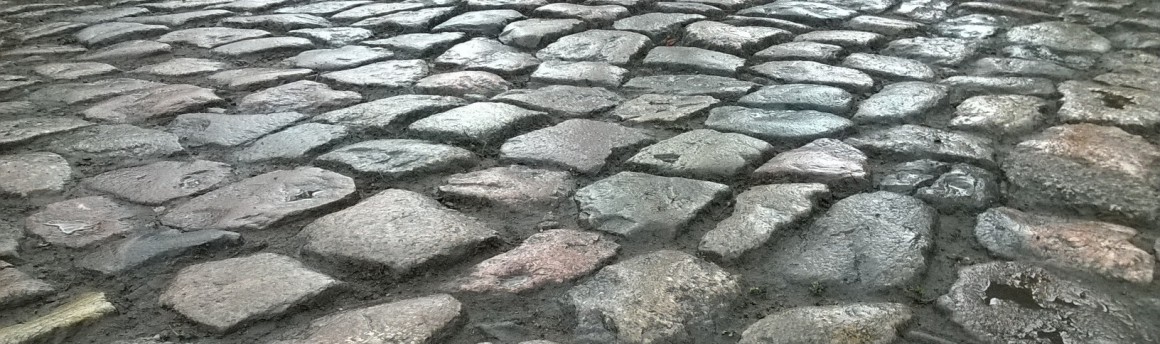
Alt-Tegel has one speciality compared to the other Reinickendorf villages. Its old village is a dead end. So you can enter the meadow from one side but then just circle it at the end and go back. The church also looks a bit different. All the previous church buildings (from the first shortly after 1230 until the last from the end of the 19th century) have been replaced by this one with an urban appearance in 1911. The village green is surrounded by a good mixture of old houses (like the one with the red bricks) and younger multi-storey apartment buildings from the end of the 19th century. You can still find quite a lot cobble stone roads which look nice but feel terrible when travelling by bike.

Greater Berlin Act (1920)

After the Industrial Revolution and the inception of the German Empire in 1871 the population increased immensely. People were leaving the countryside and headed towards the cities hoping for jobs and better living standards. Berlin as many other cities needed more living space. In 1920 six independent towns, fifty-nine rural municipalities and twenty-seven commodity districts were incorporated. Apart from a few (partly just temporary) modifications (like administrative re-organisation or the Berlin Wall) this is what Berlin still looks like today.

gruß, heike.

Heiligensee (again): some facts.

In the northwest of Berlin you find Reinickendorf which is the twelfth borough of Berlin and the fifth biggest of the twelve. In the northwest of Reinickendorf you will find Heiligensee which is one the six villlages that were merged into Reinickendorf about a hundred years ago (Greater Berlin Act in 1920: the increase of population came with a rising demand for living space, so adjacent areas were incorporated).

The result is that we have six small village centres with a small church on a village green in each of them. I really should make that my next contribution but we still have so many rainy days that my photos keep on looking like these.

The village church probably dates back until the end of the 15th century. But as usual there must have been a wooden predecessor, in this case from at least (latest) 1308. The old Heiligensee centre with the church is located on a small strip between River Havel and the eponymous Lake Heiligensee (by the way the only lake in Berlin that is completely in private hands!).

I spend some of my weekends and holidays there at my boyfriend’s. Mostly Heiligensee is three degrees colder than the city centre but as a compensation it seems to have more sun. Rainclouds appear to come to a halt right over Tegel. Could this be linked to the airport? No one knows.

Days in Heiligensee consist of gardening, dreaming and philosophising, taking walks along the river but also a lot of hanging around in bed in a not quite perfect house (which of course has to come to an end with the beginning of spring).

Please let me know if you are interested in any special subjects, if you have any questions or want something to be proven or evidenced with a photo or video.

gruß, heike.

Heiligensee: The Heralds of Spring

I haven’t written for a while because I have been sick and couldn’t even go out for days. The whole city seems to be sick at the moment. Perhaps this is because we are all waiting desperately for the winter to be over. Berlin bucks up for the final spurt towards spring. Though I must admit we’ve had winters far worse. But Berlin in winter is always hard as I have mentioned before.

WP_20160301_12_26_06_Pro
First rays of sunlight on the remains of last autumn.
WP_20160301_12_13_35_Pro
All-season swamp at the roadside.

The shops have been offering seeds and spring decor since the end of January but it is not easy to feel that seasons are moving on before the appearance of the first spring indicators.

WP_20160301_12_06_55_Pro
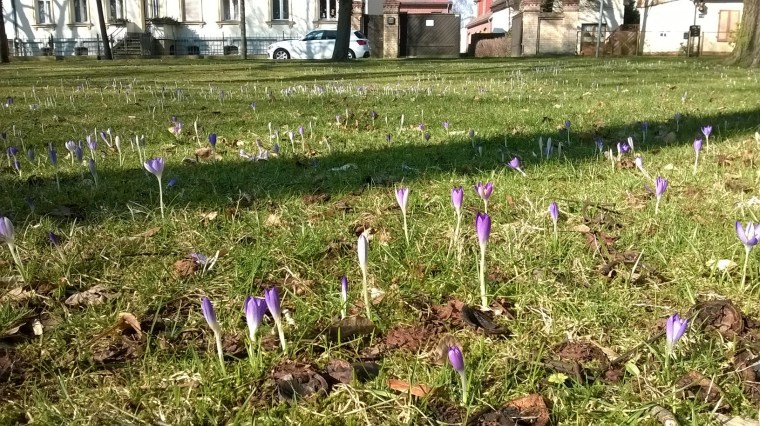
Crocuses on the village green.
WP_20160301_12_00_28_Pro
The seem smaller than usual.
WP_20160301_11_59_45_Pro
…and less.
WP_20160301_12_10_12_Pro
Snowdrops.

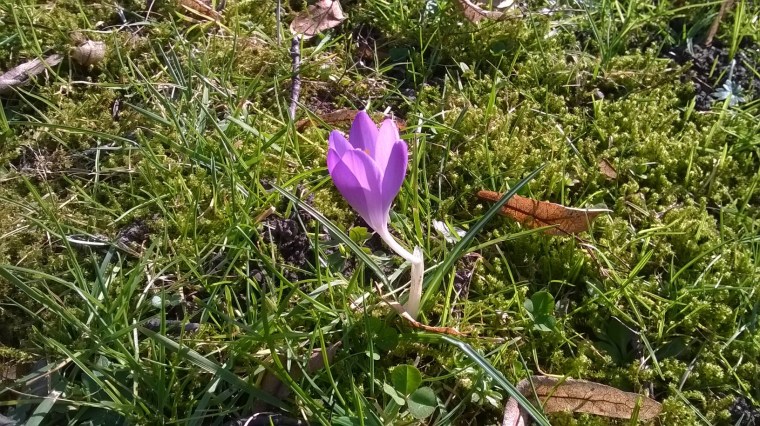
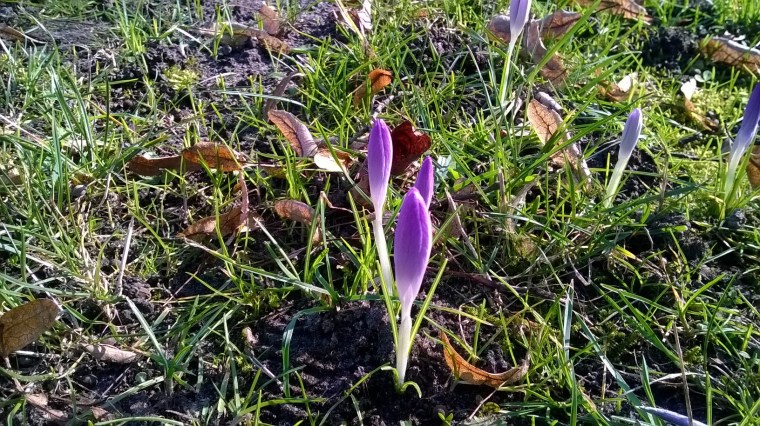
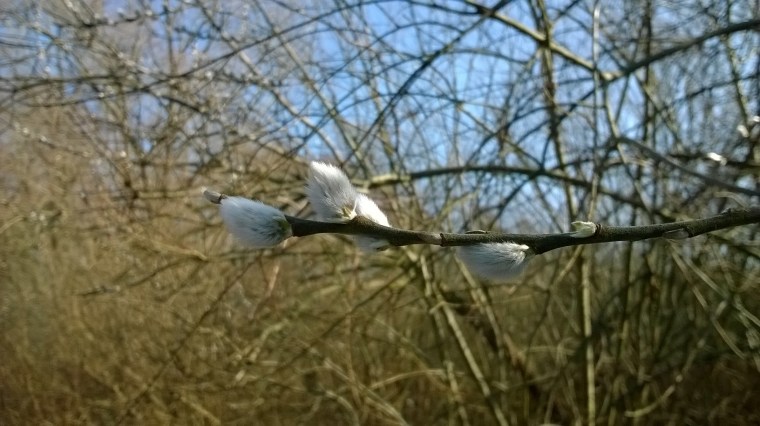
The first thing you can see is snowdrops and crocuses that seem to have struggled for a long time to reach the surface of the earth. They normally come in groups and lean against each other as they stand shivering in the cold winds of the evanescent winter. But I feel that as soon as you can see blue sky for longer than an hour a day and blooming willow catkins, spring is finally on its way.

WP_20160301_12_12_23_Pro
Willow catkins.
WP_20160301_12_13_53_Pro
Plucking is illegal (nature protection).
WP_20160301_12_16_44_Pro
Blue skies in Heiligensee.

This is the time for long walks to get rid of the last bits of cold and sickness. It is the time to shake off the bad part of winter (the one that comes after Christmas and when you realise there will be no snow). It is the time to wonder about spring-cleaning, new clothes or even changing your life. And it is time for me to listen to my favourite spring song ever.

In the presence of the spring there is a holy light on everything and all around my feet I feel the earth stirring with the burden of new life.

In the presence of the spring I feel a sudden rhythm like a new heart kicking and it’s pushing through the ice and snow crying „we shall be born!”

Sally Oldfield, In the Presence of the Spring, 1990.

gruß, heike.

Mitte: Sophienstraße

Until a few years ago I had a romantic fantasy about my future. I would have a good job and earn quite a lot money (because that is so typical for Berlin!) and live in a wonderful big flat in Sophienstraße in Mitte.

When I’d come home from work with my beautiful black Peugeot ladies’ bicycle (which actually existed when I started having this fantasy) I would stop at the small pralines and chocolates shop and buy handmade pralines to surprise my two children when they come home from ballet and violin class. After a family dinner in our big living room we would cuddle up in front of the (for my sake fake) fireplace, enjoy the chocolates and tea and I would read stories to my children until they’d fall asleep. My husband and I would switch to red wine and talk about our wonderful jobs and plans for the weekend.

On the weekends I would buy fresh vegetables on the farmer’s market at Hackescher Markt, carry everything home in a basket and cook wonderful meals. Every Sunday we’d play games, make trips to the countryside or meet the rest of the family.

Nothing of all this has ever come true. No husband, no children, no flat in Mitte. I do not even cook very well, and on the weekends I order pizza and try not to leave the house. My black Peugeot bicycle has been stolen in Prenzlauer Berg years ago.

But when I’m around Sophienstraße I still think of that sketch of a fairy tale life and feel good about it, because dreams do not always have to come true. Keep them as long as they serve a purpose!

gruß, heike.

Charlottenburg: Windburger

Whenever I go to one of the districts that formerly used to belong to West Berlin, I get the feeling that I am going on a time travel. I sense that former West Berlin has been neglected pretty much since the Wall came down. Of course a lot of help and restoration were necessary in the Eastern parts, but that also means that in other districts Berlin hasn’t changed too much since 26 years except for what we call City West which is the area around Zoologischer Garten and Ku’damm. Don’t get me wrong. I have no problem with that. It just attracts my attention at times. And of course this circumstance contributes the difference between all the boroughs of Berlin and makes the city yet so interesting.

A few days ago I have been to Charlottenburg. This district is quite big and the home of e.g. Charlottenburg Palace with its wonderful gardens and some pretty cool museums and theatres. People that live in Charlottenburg have good jobs, like antiques and go to the theatre and ballet rather than to the cinema (except stuff like original versions in the Cinèma de Paris maybe). Some places seem a bit run down, but still proud of the long history of a district that was incorporated in 1920 being a large town already. There are a lot of small and cute shops that sell arts, antiques and rummage, delis that sell wine, chocolate truffles and Italian specialties and also quite a few galleries.

In the western parts everything seems bigger to me. The streets seem bigger, even the buildings seem bigger, while in the eastern part everything is divided into small sections and the streets and buildings seem smaller. (Although I am pretty sure I must be mistaken. I mean, how could this be possible?) If I give some thought to it, there might be several reasons, the first of which does not have anything to do with an unequal development after the Fall of the Wall but long before. Both Charlottenburg (former West) and Prenzlauer Berg (former East) for example have old buildings. Prenzlauer Berg is dominated by old buildings many of which derive from around 1900. But it has a short history as a housing area compared to Charlottenburg. A lot of houses were built after a couple of master plans in a short time (especially from 1889 to 1905) in Prenzlauer Berg because Berlin was growing and people needed space. So it was adopted first and then covered with buildings. Charlottenburg in contrast had been developing and expanding as a town of its own for centuries before it was added to Berlin. So it brought the structure of a complete town with it whereas Prenzlauer Berg was transformed from an agrarian spot into one with houses when needed.

The second reason might be that after 1990 the former East was more attractive to investors because the properties weren’t expensive and there were a lot of them. So we had a lot more construction activity here than in other parts of the city.

The third reason might be that old houses in e.g. Charlottenburg still have their old plastering whereas in Prenzlauer Berg we have smoothed fronts which are furthermore coloured. So a row of red, green and blue houses with smoothened facades might look smaller than those with stucco in light yellow and white.

So… these thoughts in mind I lingered around Stuttgarter Platz the other day, which is one of those parts I do not go to very often because I do not feel too comfortable there. But then the good thing about Berlin is that even if you’re in a place you do not want to stay or don’t feel comfortable with, you just turn around the next corner and might end up in a whole different world. And just around a corner in Windscheidstraße you will find the small place of refuge you might have been looking for: the Windburger. Food places in Berlin tend to be named after the street they’re located, so that’s where the name originates from.

The Windburger is a small burger restaurant with about room for twenty people. You get in, order your burger at the counter, pay and get a pager that lets you know when your burger is ready. There is a big variety of burgers, of course also veggie and different sizes. But another thing you do not want to miss is the homemade fries.

The little snack bar has yet another special feature. Every time I get there they play 90’s music. As a German I know that the whole rest of the world makes fun of us because there is so much 80’s music played by radio stations and clubs and places. But Windburger seems to be ahead of the times.

gruß, heike.


Mitte: Where is the Old Town?

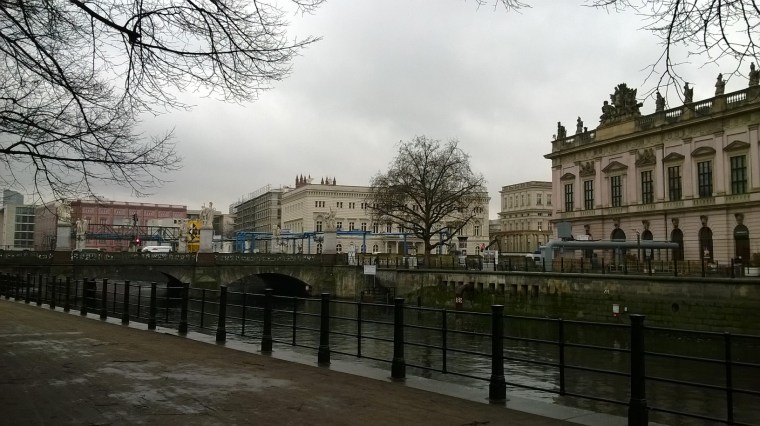
Have you ever noticed that Berlin does not have a classic historic centre with little streets and old buildings that remind the random contemplator of past times? If you’re looking for the beginning of Berlin’s history you will end up in Mitte in the area surrounding Museum Island and Alexanderplatz. This is the origin of the two villages Berlin and Cölln that have been existing next to each other at least since the 13th century, and from which in the following centuries, the city of Berlin developped by the incorporation of neighbouring villages. (We have to learn that stuff in primary school. And if you have ever seen pictures of these two nuclei of population you will agree that they look like a coffee bean.)

But still hardly anything can be found from oldest times if you’re standing on site.

WP_20160204_15_06_28_Pro
View from Lustgarten towards Arsenal and Humboldt University
WP_20160204_15_03_31_Pro
Berlin Cathedral (finished 1905)

The answer is more simple than you might have expected: The very centre of the city has been redesigned several times because it was needed for different purposes. Berlin has always been residence or capital of some political arrangement. The residence of the Margraves and Prince-electors needed a central spot with a residence palace in 1442. The palace was extended in 1702 by Friedrich I. (king) and became imperial residence in 1871 (until the end of WW I). To make matters worse there has actually been a time in the 19th century when old stuff was unwanted. How funny it is that at the end of the 19th century people would run into exhibitions to see paintings of what they called the old city of Berlin, which in this case means 17th and 18th century.

The palace was transformed into a museum during the Weimarer Republic and heavily damaged in WW II. When Berlin was divided after the war and Mitte became a part of the Soviet sector (East Berlin), the city center was transformed corresponding the requirements of a Socialist capital which of course wanted to get rid of any imperial traces. The City Palace was blown up and the Palace of the Republic was built on the exact spot. After the Wall came down there were new plans to rebuild or reconstruct the big space between the museums and the TV Tower to represent the center of the reunited Germany. So the Palace of the Republic was torn down as well and now they’re rebuilding the City Palace and talk about the restoration of historicity. (And isn’t that wonderful?)

There will also be a reunification memorial, an extension of the U-Bahn and some other stuff to lure tourists into the city. And because this is Berlin, everything is attended with a lot of scepticism and clamour of the people because everyone knows it best. 😉

If you want me to go deeper into the subject or if you have any questions, please let me know in the comments. I am sorry for the photos but yesterday was an awfully rainy day.

gruß, heike.

Wedding: City Kino: British Shorts

This weekend took me to the British Shorts. The short film festival is one of the rare things to look forward to in cold January. I have to admit that I hesitated at the last moment, because we had minus fifteen and it would have been more comfortable to just stay at home and watch movies. Berlin is wonderful in summer, but the winter is cruel. I’ve heard a lot of people say that and I feel so myself. So a big thumbs-up to all the tourists who decided to visit us around this time of year. You can see them everywhere is their furry coats and jackets, big scarves and runny noses.

Before heading towards the cute, small cinema in the borough of Wedding, we took a detour to Schönhauser Allee to have a quick bite at the Tigris, one of my favourite falafel places. To be honest, there are some good falafel places in Berlin, but this is definitely one of my top three. And it’s without a doubt the friendliest one. The guy who works there prepares the food with such care and competence that you want to watch him the whole evening.

We sat there a tiny bit too long but we managed to arrive at the cinema shortly before our reserved tickets would be given away. The British Shorts take place in four different cinemas that show different sets of short films. It’s always six or seven in a row. The set we wanted to see took us to the City Kino Wedding which was also the nearest of the four to my place.

A small sign on a bookshelf inside the cinema hints at its past. Since the early 1960’s the multi-purpose hall was part of the French Cultural Center that was founded and built by the French Allies in Berlin to provide films, theatre performances and art to the French Army and their families. After the reunification of Germany the whole thing was continued as Centre Francais de Berlin which today is a joint Franco-German youth and cultural centre. It includes the cinema, a restaurant, a hotel and conference and meeting rooms.

The short films were fantastic. I love short films. So if you know any you think I should see, please send me a link!

gruß, heike.